
The Iran War and Its Impact on Africa
The global Pulse
Since the US and Israel attacked Iran on February 28, 2026, the implications of an increasing oil price and the decline of supplies have remained a threat to the global economy. Brent Crude UKOIL, represents the current price of oil that most African nations use to benchmark their fuel subsidies and import costs. It shows prices hovering around $105.00 per barrel up from $72 / barrel on Feb. 27.
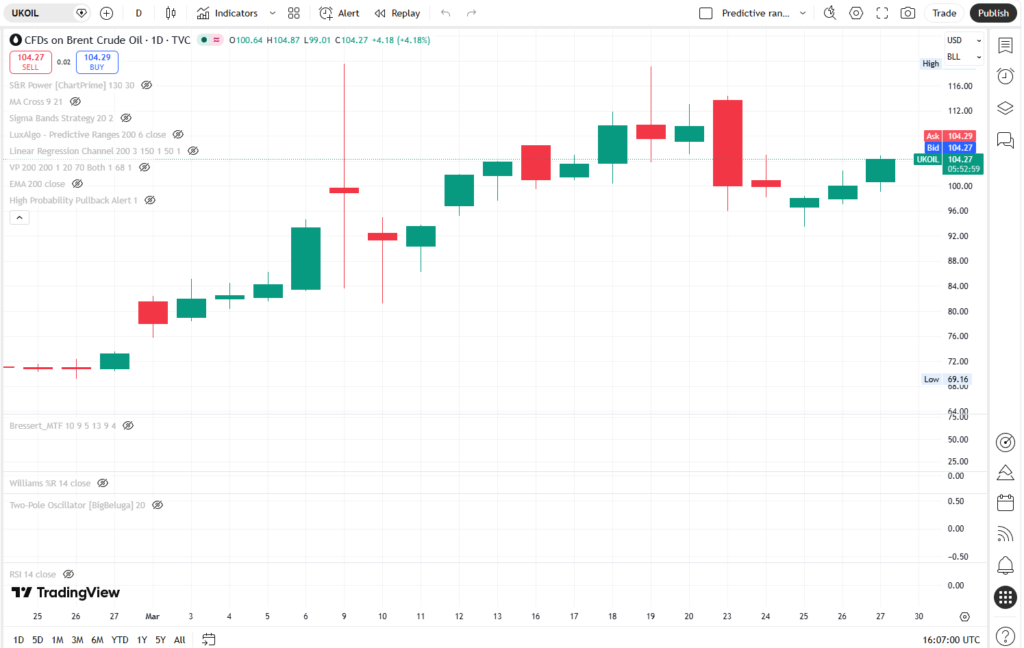
Oil prices are the foundation for all other prices in the economy, including fertilizers, a vital commodity for food-poor African countries.
The Diaspora Lens
Economic Impact
The Fertilizer-Food Security Link
The surge in oil prices doesn’t just stay at the gas pump; it flows directly into the soil. Most modern fertilizers rely on the Haber-Bosch process, which requires massive amounts of natural gas and energy derived from oil.
For food-poor nations across the African continent, this creates a “Double Shock”:
- Increased Input Costs: Farmers in regions like the Sahel or East Africa, already facing climate volatility, are seeing the cost of urea and NPK fertilizers skyrocket in tandem with Brent Crude (UKOIL).
- Import Dependency: Many African nations import the majority of their chemical fertilizers. When the Brent Crude Futures (BRN1!) rise, the shipping and freight costs to move these goods to African ports rise as well, compounding the crisis.
Analysis: This isn’t just an economic shift; it’s a threat to sovereignty. When a conflict in the Middle East dictates the price of bread in Addis Ababa or Lagos, it highlights the urgent need for the Diaspora to invest in localized, sustainable agricultural inputs that aren’t tied to the volatility of fossil fuel benchmarks.
Social / Political Impact
The U.S. Diaspora: The Energy Burden Gap
While the U.S. economy is often cited as resilient to $100 oil, this masks a deep “energy inequality” within the Black population. According to recent 2026 data, the median household income for African Americans is approximately $56,020, roughly 36% lower than white households. This lower income floor means that spikes in Brent Crude (UKOIL) translate into a disproportionate “energy burden.” Studies show that Black households spend an average of 5.1% of their income on energy, compared to 3.2% for the average American home.
This “tax on living” is exacerbated by older, less energy-efficient housing stock in many majority-Black census tracts. When oil-driven inflation hits the supply chain, these families face “unmanageable” trade-offs—sacrificing nutritious food or medical care to keep the lights on. For the U.S. Diaspora, the Iran War is not just a foreign policy headline; it is a direct threat to the fragile post-pandemic wealth gains seen in the last few years.
Conclusion: A Call for Strategic Autonomy
The current escalation in the Persian Gulf is a stark reminder that the global African Diaspora remains disproportionately vulnerable to geopolitical tremors half a world away. Whether it is the small-scale farmer in East Africa facing prohibitive fertilizer costs or a Black household in the United States navigating an outsized energy burden, the common thread is a dangerous dependency on a volatile, fossil-fuel-based global economy.
True resilience for the Diaspora cannot be found in temporary subsidies or foreign aid; it must be built through strategic autonomy. This means investing in localized energy solutions, supporting sustainable agricultural practices that bypass traditional petrochemicals, and strengthening intra-Diaspora trade networks that can buffer the shock of Brent Crude (UKOIL) spikes. As we watch the “war premium” redefine the cost of living, our focus must shift from merely enduring these crises to outgrowing the systems that create them. The Iran War is a signal: the time to decentralize our dependence and secure our collective economic future is now.
